
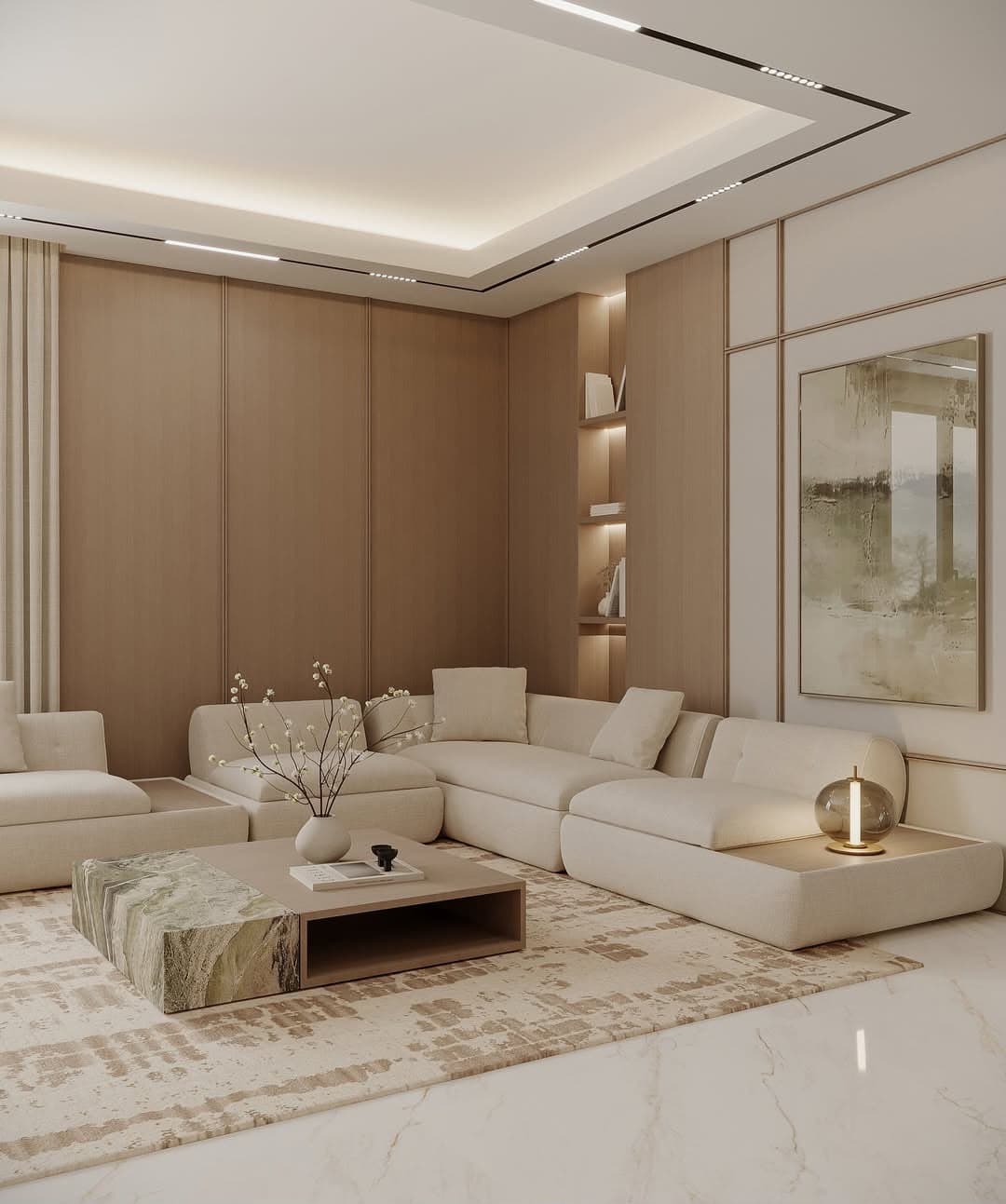
Embarking on a luxury interior fit-out in Dubai requires more than just a vision; it demands precision, local regulatory expertise, and a flawless execution strategy. Whether you are transforming a high-end villa in Dubai Hills, Emirates Hills or Palm Jumeirah, or building out a corporate headquarters in Downtown Dubai or DIFC, understanding how the fit-out process actually works — not just what it costs — is what separates a smooth six-to-ten-week project from a stressful, budget-blown ordeal that drags on for months. This guide walks through everything a homeowner, facilities manager or business owner needs to know before signing a contract with a turnkey fit-out contractor in Dubai.
What "Luxury Fit-out" Actually Means
The word "luxury" gets used loosely in Dubai's interiors market, so it's worth being precise. A luxury interior fit-out is not simply an expensive finish schedule. It is the combination of four things working together: an accurate 3D design that is approved before a single wall is touched, mechanical and electrical (MEP) engineering that is planned rather than patched in afterwards, architectural joinery built to millimeter tolerances rather than assembled from flat-pack components, and a single accountable team that owns the outcome from first sketch to final handover. Remove any one of those four elements and the result — no matter how expensive the marble or how large the chandelier — reads as a renovation, not a genuine luxury interior fit-out.
Turnkey vs. Traditional Multi-Contractor Fit-out
Most fit-out projects in the UAE still happen the traditional way: the client hires an interior designer, who hands drawings to a separate contractor, who then subcontracts joinery, MEP, flooring and curtains to different specialist vendors. Every handoff between those parties is a place where measurements drift, timelines slip, and — critically — nobody is fully accountable when something goes wrong.
A turnkey fit-out contractor collapses that chain into one point of contact. At Bait Al Ebdaa, design, MEP engineering, authority approvals, joinery manufacturing and on-site installation sit under one roof, which means:
- One contract, one warranty. There is no finger-pointing between a designer and a contractor when a drawer doesn't close properly — one team is responsible for the entire outcome.
- Faster decision cycles. A design change can be checked against manufacturing capacity and MEP routing in the same conversation, rather than a week of emails between three companies.
- Realistic timelines. Because the same team plans and builds, published on-site schedules (typically 6–10 weeks for an apartment or villa once the design is approved, longer for large offices) reflect actual production capacity rather than optimistic guesswork.
The Fit-out Process, Step by Step
Understanding the sequence helps you evaluate any contractor's proposal, not just ours. A properly run villa or office fit-out in Dubai moves through five stages — see our full process breakdown for the detailed timeline of each:
1. Discovery and Photorealistic 3D Design
A site survey captures exact dimensions, existing MEP points, and structural constraints. From there, a design team produces photorealistic CAD renders so you can approve materials, lighting temperature, joinery finishes and furniture layout before any physical work begins. This step alone removes the single biggest cause of budget overruns: mid-construction changes of mind, which are far cheaper to make on a screen than on site.
2. Authority Approvals
Covered in detail below — this is the step DIY renovators and undercapitalized contractors most often underestimate.
3. Joinery and Furniture Manufacturing
While approvals are being processed, custom joinery — kitchens, wardrobes, TV units, vanities, bespoke doors — moves into production. Manufacturing in parallel with the approvals process, rather than waiting for a permit before starting production, is one of the main ways an in-house factory shortens the overall timeline.
4. Site Works and MEP Installation
Civil works, electrical first-fix and second-fix, plumbing, HVAC modifications and flooring happen in a sequenced program, with daily progress tracked so nothing is signed off out of order.
5. Installation and Handover
Manufactured joinery is installed, Somfy motorized curtain systems are commissioned, snagging is completed, and the space is handed over with warranty documentation.
Navigating Dubai Municipality and Civil Defense Approvals
One of the biggest hurdles in any UAE interior project is obtaining the necessary No Objection Certificates (NOCs) from the relevant authority — Dubai Municipality (DM), the Dubai Development Authority (DDA) for free zones, Trakhees for certain master-developer communities, or Dubai Civil Defense (DCD) for fire and life-safety systems. Skipping this step, or hiring a contractor who does, is not a shortcut — it is a liability that can result in forced removal of completed work, fines, or an inability to sell or lease the unit later with an unpermitted layout on file.
What actually gets submitted depends on scope: a cosmetic refresh (paint, flooring, movable furniture) typically needs no permit, but any partition work, MEP modification, or structural change requires drawings stamped and submitted through the correct authority before work starts. A contractor who tells you "we'll sort the paperwork after we start" is telling you they don't have an in-house authority-liaison function — which most fit-out companies genuinely don't. A dedicated liaison team that works directly with DM, DDA, Trakhees and DCD, rather than outsourcing approvals to a third-party consultant, is one of the clearest signals of a contractor set up to run projects, not just style them.
Villa Fit-out vs. Office Fit-out: Key Differences
The two project types share a process but diverge sharply in priorities:
- Villa fit-out in communities like Arabian Ranches, Dubai Hills Estate or Al Barari centers on livability — kitchen workflow, walk-in wardrobe capacity, bathroom joinery, and how natural light and Somfy-motorized drapery interact across the day. Approvals typically route through the master developer or DM depending on the community.
- Office fit-out in Downtown Dubai, DIFC or Business Bay centers on acoustic performance, cable management for IT infrastructure, brand expression in reception and boardroom areas, and DCD fire-and-life-safety compliance for partitions and ceiling work. Office projects also tend to run on tighter deadlines tied to a lease-commencement date, which makes an accurate, honestly-quoted timeline more important than a slightly lower price.
Cost Factors and Budgeting for a Luxury Fit-out
Three variables drive the majority of the cost difference between two fit-outs of the same square footage: the scope of MEP work (a full mechanical/electrical rework costs far more than a cosmetic layer over existing services), the amount of bespoke joinery versus loose furniture, and the finish tier chosen for surfaces like stone, veneer and drapery fabric. Rather than quote a single blended rate that hides which of those three is driving the number, we publish indicative starting prices by category on our pricing page, and use an interactive size-and-scope calculator so you can see how square footage, project scope and emirate affect the estimate before requesting a firm, survey-based quotation. Treat any online estimate — ours included — as a planning figure; the binding number always follows a site survey.
Materials and Craftsmanship: Why In-House Joinery Matters
Luxury is in the details, and the details live in the joinery. A significant share of what a client perceives as "quality" in a finished space — how a soft-close drawer feels, whether a veneer grain matches across a run of wardrobe doors, how flush a handle-less kitchen front sits — comes down to manufacturing tolerance, not design intent. By producing bespoke furniture and architectural joinery in a dedicated 15,000 sq ft facility in Ajman using German CNC machinery, a contractor keeps tight quality control over that tolerance and eliminates the international shipping delays and customs uncertainty that come with importing joinery from Europe or Southeast Asia. It also means a snag — a drawer that needs re-hanging, a hinge that needs adjusting — can be resolved with a factory visit rather than a six-week reorder.
Choosing the Right Fit-out Contractor in Dubai: A Checklist
Before signing with any contractor for a luxury interior fit-out in Dubai, verify the following:
- Do they hold an in-house design, MEP and joinery-manufacturing capability, or do they subcontract each discipline separately?
- Can they name the specific authority (DM, DDA, Trakhees, DCD) your project needs to clear, and do they manage that submission directly?
- Will you see photorealistic 3D renders and approve them before construction starts, or only a 2D floorplan?
- What workmanship warranty is offered in writing, and what does it actually cover?
- Can they show a completed project of comparable scope — our portfolio includes a confidential government authority headquarters, private villas and corporate offices across Dubai and Abu Dhabi.
Common Mistakes to Avoid
The most expensive mistakes in a fit-out project are rarely about the finishes chosen — they're about sequencing and accountability. Starting site works before authority approval is secured, approving a 2D floorplan without seeing a 3D render of how finishes and lighting actually interact, splitting joinery and MEP between separate vendors with no single point of accountability, and accepting a verbal estimate as a fixed price are the four mistakes that account for most of the delays and disputes we're asked to resolve or take over mid-project.
A Week-by-Week View of a Typical Villa Fit-out
Published timelines mean little without knowing what actually happens inside them, so it's worth breaking a typical 8-week villa fit-out into its real phases rather than treating it as one undifferentiated block of "construction."
Weeks 1–2: Survey, Design and Approval Submission
A detailed site survey is followed by 3D design development and client sign-off. In parallel, drawings are prepared and submitted to the relevant authority. This is the stage most projects rush — and the stage that, when rushed, causes the most downstream delay.
Weeks 2–4: Approvals Processing and Early Manufacturing
While the authority reviews submitted drawings (timelines vary by authority and submission complexity), joinery manufacturing for approved, non-structural elements — kitchen carcasses, wardrobe frames — can often begin, since these don't depend on the permit itself, only on the design being locked.
Weeks 4–7: Site Works, MEP and Installation
Once approval is granted, civil, electrical and plumbing works proceed on-site in sequence, with manufactured joinery arriving for installation as each area becomes ready to receive it.
Weeks 7–8: Snagging, Commissioning and Handover
Motorized systems are commissioned, a full snagging walkthrough is completed with the client, and warranty documentation is issued at handover.
Office fit-outs follow a similar structure but typically run longer for equivalent square footage, since commercial MEP (structured cabling, HVAC zoning, fire-and-life-safety systems) is usually more extensive than in a residential villa.
Sustainability and Energy Efficiency Considerations
Sustainability has moved from a nice-to-have to a genuine factor in how UAE fit-outs are specified, driven partly by Dubai's own green building direction and partly by client demand. Practical levers that make a measurable difference without inflating budget significantly include specifying LED lighting throughout rather than halogen, integrating motorized shading (Somfy systems) to reduce solar heat gain and the resulting air-conditioning load, sourcing joinery timber and board from certified sustainable suppliers, and specifying low-VOC paints and adhesives, which also meaningfully improves indoor air quality during and after the fit-out. None of these require a fundamentally different design approach — they're specification decisions made at the design stage, which is one more reason that stage deserves real time and attention rather than being rushed to get to construction sooner.
Working With an Interior Designer vs. Going Direct to a Turnkey Contractor
Clients sometimes assume a turnkey fit-out contractor and an independent interior designer are competing options — in practice, the two work well together, and which route makes sense depends on the project. Engaging an independent designer first suits clients who want a highly personalized creative direction and are prepared to manage the additional coordination layer between designer and contractor. Going directly to a turnkey contractor with in-house design capability suits clients who prioritize a single accountable timeline and want to move from concept to handover without a separate design-then-tender phase. Many Bait Al Ebdaa projects also work in a hybrid mode: an external designer sets the creative brief and material palette, while our in-house team handles MEP engineering, authority approvals, joinery manufacturing and installation — the coordination overhead of a fully split model without losing the client's chosen design voice.
Design Trends Shaping Luxury Interiors in Dubai and Abu Dhabi
Several material and layout trends have become consistent requests across recent luxury interior fit-out projects in the UAE. Warm, tactile material palettes — fluted timber panelling, honed (rather than polished) natural stone, and bouclé or linen-weave upholstery — have largely displaced the high-gloss, heavily mirrored aesthetic that dominated a decade ago. Handle-less, push-to-open joinery continues to be the default expectation in new kitchens and wardrobes rather than a premium upgrade. Home wellness spaces — a dedicated space for a home gym, sauna or plunge pool — have moved from a rare request to a standard line item in villa briefs above a certain size. And centralized smart-home control, tying together Somfy motorized drapery, lighting scenes and climate zoning into a single interface, is now expected in the majority of new villa fit-out briefs rather than treated as an optional add-on.
Dubai vs. Abu Dhabi: Regional Considerations for Fit-out Projects
While the fit-out process is broadly similar across the UAE's two largest emirates, a few practical differences are worth knowing before budgeting or scheduling a project. Approval authorities differ — Dubai Municipality, DDA and Trakhees cover different Dubai communities depending on the master developer, while Abu Dhabi projects typically route through the Abu Dhabi Municipality (ADM) or the Department of Culture and Tourism for certain zones, and Abu Dhabi Civil Defense (ADCD) for fire-and-life-safety sign-off — meaning a contractor experienced in Dubai submissions isn't automatically equipped for an Abu Dhabi project without equivalent local authority relationships. Material and labor logistics also differ slightly, since Abu Dhabi projects sit a longer transit distance from an Ajman-based manufacturing facility, which is typically reflected as a modest location multiplier in indicative pricing rather than a fundamentally different cost structure — see our pricing page for how this is broken out by emirate.
Two Real Scenarios: Villa vs. Office Budgeting
To make the cost factors above concrete, consider two illustrative scenarios drawn from typical project patterns. A 4,500 sq ft villa in Arabian Ranches with a full turnkey scope — new kitchen and wardrobe joinery throughout, MEP refresh, motorized drapery in the main living areas — sits toward the higher end of the residential scope spectrum because of the joinery volume and the number of individually specified rooms. A 4,500 sq ft open-plan office fit-out in Business Bay with a comparable "full turnkey" scope but less joinery volume (a reception desk, a boardroom table surround, some storage joinery) and more MEP-heavy work (structured cabling, HVAC zoning, partition walls) can land in a similar overall range but through a very different cost breakdown — proportionally more MEP and less joinery. This is exactly why an estimator or pricing table needs to be read by category, not just by total square footage: two projects of identical size can have very different cost drivers depending on scope.
Frequently Asked Questions
How long does a luxury villa fit-out take in Dubai?
A typical villa fit-out runs 6–10 weeks from signed design approval to handover, depending on the extent of joinery and MEP work. Larger villas or projects requiring extensive structural MEP changes can take longer — see our process page for stage-by-stage timelines.
Do I need Dubai Municipality approval for an interior fit-out?
Any project involving partitions, MEP modifications or structural change needs authority approval before work starts — the specific authority (DM, DDA, Trakhees or DCD) depends on your building and community. A cosmetic refresh with no partition or MEP change typically doesn't require a permit, but this should always be confirmed against your specific building rather than assumed.
What's included in a turnkey fit-out quotation?
A properly scoped quotation itemizes design and 3D visualization, authority approval handling, joinery manufacturing, MEP works, installation labor, and the workmanship warranty period — see our pricing guide for indicative ranges by category.
Is custom joinery worth the extra cost over ready-made furniture?
For fitted items — kitchens, wardrobes, vanities — custom joinery is built to the exact dimensions of the space, which ready-made furniture cannot match, and it materially increases resale and rental value in Dubai's luxury market. For loose furniture like dining tables or sofas, ready-made can be the more cost-effective choice.
Can I stay in my villa or keep my office running during the fit-out?
For partial-scope projects, yes, with a phased program. For full turnkey fit-outs involving structural MEP work, most clients relocate for the duration to avoid dust, noise and the safety complications of an occupied worksite during construction.
Do I need a separate interior designer, or does a turnkey contractor handle design too?
A turnkey contractor with in-house design capability — like Bait Al Ebdaa — can take a project from concept through 3D design to construction without a separate designer, though clients who already have a designer relationship can bring that creative direction in and have it executed by the in-house delivery team.
What warranty should I expect after handover?
A written workmanship warranty (commonly around 5 years for joinery and fit-out work) should be specified in the contract before work begins, along with what it covers — hardware failure, veneer lifting and structural joinery issues are typical inclusions.
Can furniture and decor be sourced as part of the same project?
Yes — many turnkey scopes extend beyond fixed joinery to loose furniture, lighting fixtures and soft furnishings sourcing, coordinated through the same design palette established at the 3D design stage so the finished space reads as a single cohesive scheme rather than fitted joinery plus separately sourced furniture that doesn't quite match.
What happens if I want to make changes after construction has started?
Changes after construction begins are always possible but become progressively more expensive and time-consuming the later they're requested — a joinery configuration change is inexpensive before manufacturing starts and costly after panels are already cut, which is exactly why the 3D design and shop-drawing sign-off stages exist and deserve real time before construction begins.
Ready to start your project?
Contact Bait Al Ebdaa today to discuss your vision for a luxury interior space, or use our cost estimator to get an indicative starting figure before your site survey.